Coming home
Bring discharge and rehabilitation plans into the support conversation.
If you’re living with a brain injury, talk to us about help at home, daily routines and getting out into the community.
Acquired brain injury describes damage to the brain that occurs after birth. Its effects can differ widely, including changes in thinking, communication, movement, emotions and behaviour.
Support should reflect how the person is affected in everyday life, rather than a diagnosis alone. We invite referrals to discuss practical disability support for people living with ABI.
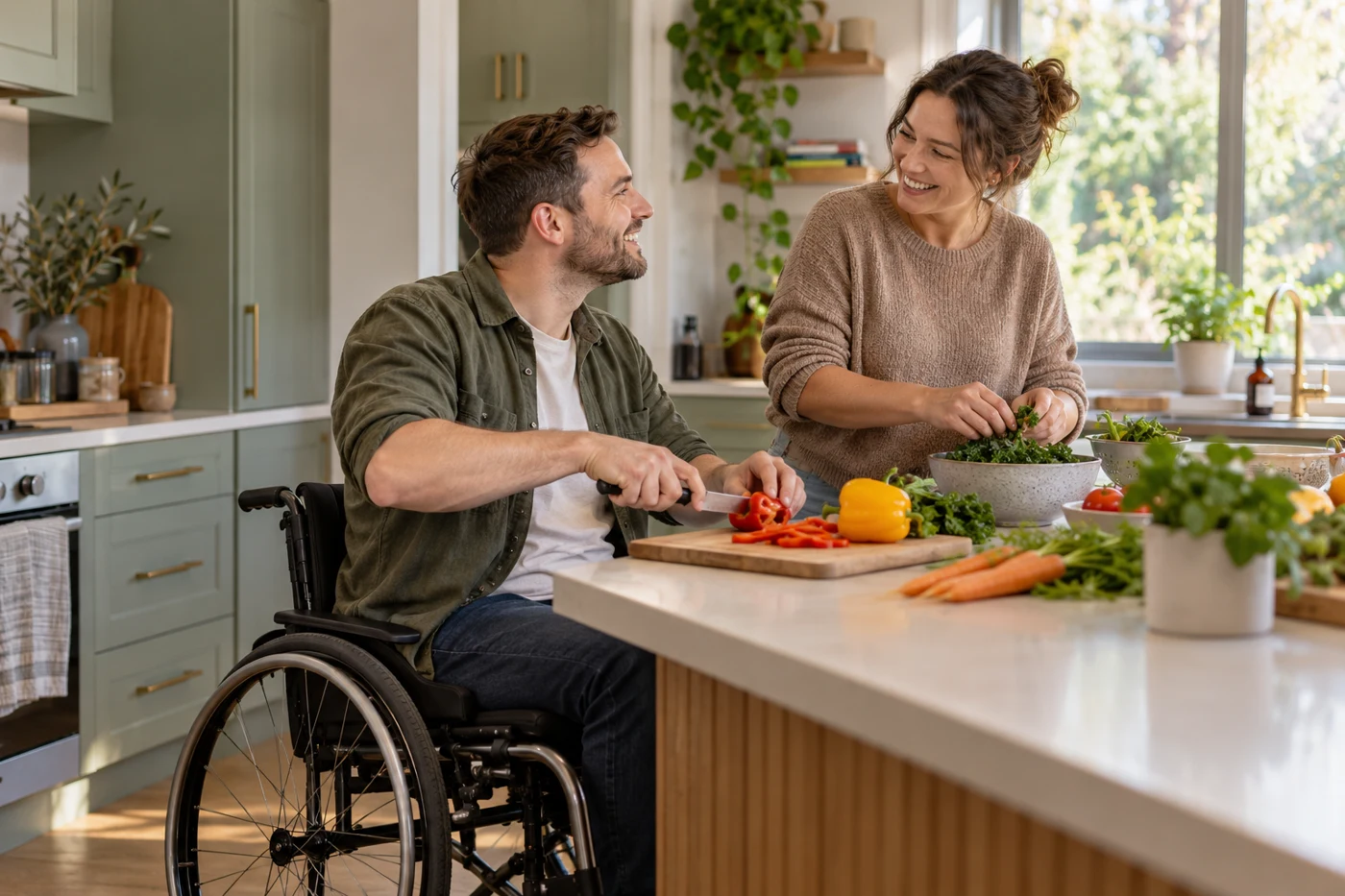
Tell us about the strategies recommended by the person’s treating professionals. A referral discussion can clarify which daily support tasks are being requested, how they fit with rehabilitation and what worker skills are needed.
Useful information includes the person’s own priorities, current routines, communication needs and support arrangements. Please speak with us before sending medical records.
Bring discharge and rehabilitation plans into the support conversation.
Identify where assistance is useful and what the person wants to do themselves.
Agree on communication with the person, family and existing professionals.
Explore the care scope or talk through a referral.